This image was taken at the feed mill that I had photographed and featured on my blog a few days ago. I met Brad the owner, and he graciously allowed both myself and fellow photographer Larry the chance to look around inside. After the mill shut down for the day, we broke out our gear and we each selected an area to light paint. Admittedly it has been a while since I gave this technique a try, so I struggled a bit as I worked to light the room with my spotlight. The mill is a real labyrinth of metal and wood, and left me wondering how such a place is designed. The inside also included numerous cats roaming about, which surprised me with all the machines at work, but after I had witnessed a cat catch a mouse three feet in front of me, it all became clear very quickly. The area I chose included the old scale with the two feed bags on it, along with another scale facing the opposite direction with the number 122 on it. The blue light is coming from window light that was shining in at dusk. We usually work in the dark, but time constraints had us shooting earlier.
Tag Archives: Grain
A glimpse back in time
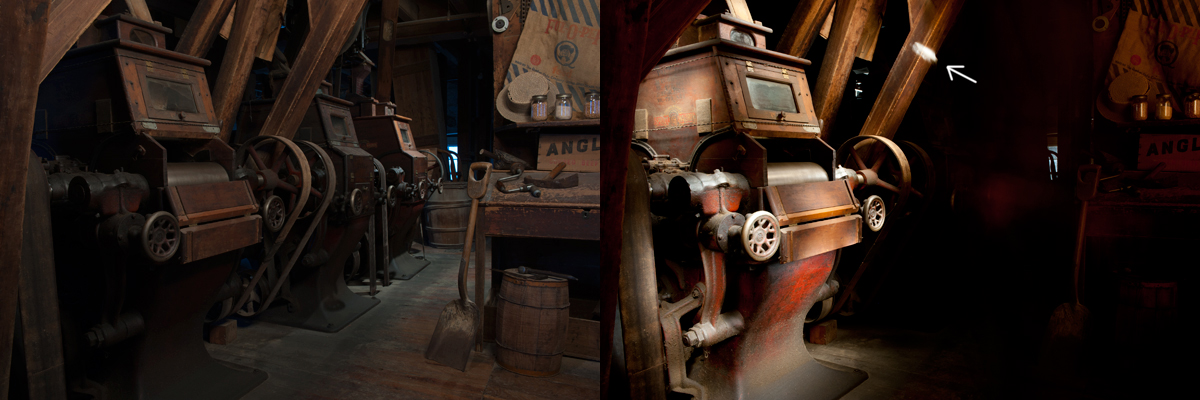
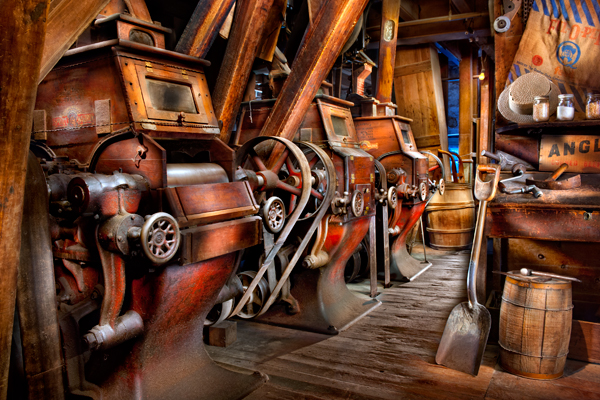
This photograph features the old equipment in a water powered grain mill. This amazing set of machines are still functional, and start right up with the twist of a shaft, which runs two stories to the basement. In the basement there is a huge tank that holds water in reserve, and at a moments notice, the entire operation is ready to go.The date on the machines says patent-1893, and the craftsmanship and build quality is characteristic of an era were necessity was the mother of invention, This is another example of painting with light, and the photography session lasted almost 2 hours and the merging of all the pieces took about 3 hours, but I go in circles sometimes trying to decide which effect I want to pick, so that complicates things a bit. As I have warned in past posts, never bump anything in your shot while doing this, and as usual, I kicked the shovel halfway through, but luckily I had it captured already. Try and find something built to these standards nowadays, and you will be looking a while or digging pretty deep in the pocketbook. The two lower photos represent the base layer on the left, upon which the image is built and that image is a very flat,subdued, dark image,upon which the highlight images are overlayed, and a single light painted sample section,on the right, which includes the flashlight source where I have the arrow pointing. I generally try to keep the light source hidden by my body or simply turned away, so the camera cannot see it. A snoot or shield on the light can help, and even if you see the light source, its irrelevant if that section is not being used.