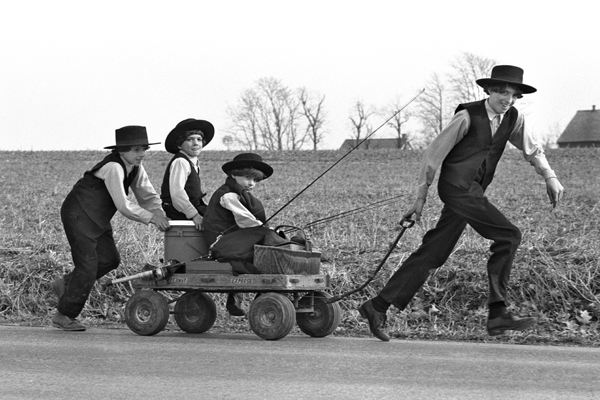
I thought I would share this image from the past, which is also included in my gallery section here, because now is the time of year when you see fisherman on the banks of the local streams around our area.These Amish boys heading to their favorite fishing hole is one of those images that I look back at and can recall the entire scene as if it were yesterday, even though it goes back to my black and white film days. I had been driving around looking for images when I passed this crew slowly walking down a back road, and I immediately knew it was something I wanted to record for posterity. I drove a ways up the road to a dirt lane, parked and probably said a small prayer as I waited, to let them come by me. One thing I will say about my experience with the Amish is they are keenly aware of their surroundings and these boys were no different.They were looking at my car the whole time they approached and when I finally brought the camera up for a shot, the oldest boy kicked it into second gear as he made things difficult for me to focus and frame the shot, but thankfully I got this image with him in mid stride as he pulled what I assume are his brothers and their gear. I think I was shooting with a Nikon f3 at the time and maybe got three shots off, and this was the winner. I am sure they forgot me as soon as they got up the road,but I remember them like it was yesterday. Back in those days, I would have to drive home, develop the film, hope I nailed the exposure, make contact prints and check for focus before being able to get excited about a shot. Oh the good old days of photography, which by the way I would never want to return to.
Tag Archives: Nostalgia
The Fairground Organ
This image hopefully showcases what I consider to be a very beautiful Bruder Fair Organ from the late 1800s. The owner was gracious enough to let me photograph the piece, which has the most lovely colors on its carved surfaces. The founder of the Waldkirch organ industry was Ignaz Bruder, 1780-1845, and he was the master teacher for several german organ builders, and four of his sons founded the business Gebruder Bruder. Two of those sons, Wilhelm and Arnold, founded their own organ factory under the name of Wilhelm Bruder Sohne. I assume this piece was done by them because that name is painted across the middle, above the figure. I did not hear the organ play,but I bet it really resonates for blocks when it does play. I am by no means an authority on these organs, but doing a little research on the net, it was hard to find two organs that looked the same, so quite possibly each piece was one of a kind. The craftsmanship is simply mind-boggling. I light painted the whole room to give it a dreamy look. Can you imagine anyone having the ability or desire to create such a masterpiece today? It not only is beautiful to look at, but the music it produces most certainly delighted countless crowds way back when as well.
Weighing the options
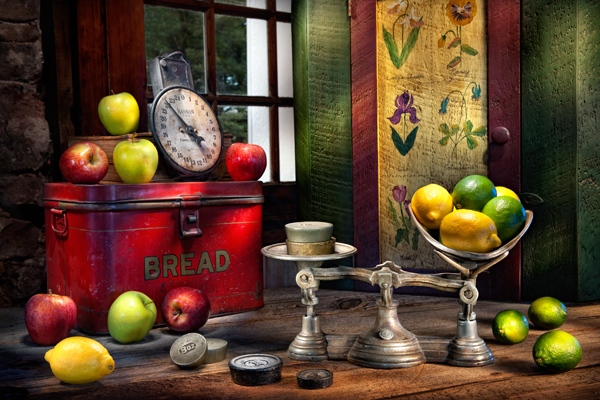
Today I visited a local florist that is planning to open an antique shop in the near future, and he graciously allowed me to look through his collection for possible photo subjects. I saw the old scale first and then selected several items to add some balance and color to the shot. I have no idea where some of my ideas come from, but I decided fruit would look neat on the scale, so I zipped over to a nearby produce stand and picked up a selection of limes,lemons and apples. For budding photographers taking notes, I light painted this shot using my small flashlight, and because the room had numerous windows, I used a 3 stop neutral density filter on the lens, which allowed me to shoot exposures around 8 seconds each. The window directly behind the shot was covered by black fabric till the very end, and then the exposure for the window portion was simply painted in on lighten mode in layers in Photoshop. Thanks to Kerry for giving me free reign in the shop.
Machine shop End Mills
Many of you may have deduced by now that I have been thoroughly enjoying my visits to the old machine shop, and each trip is an opportunity to practice my light painting techniques in the hopes of getting better. This past trip had me trying to come up with some earth shattering image, which wasted an hour of time till I finally decided to shoot this detail shot of end mills and tool holders that were on a shelf. I added the cool oil can and rustic old cutting oil can to spice up the shot. I settled on the tighter shot because I wanted my shots to have some diversity to them. The background is just a wood panel that was part of the shelf unit, and I lit it with a flashlight.
A Stitch in Time
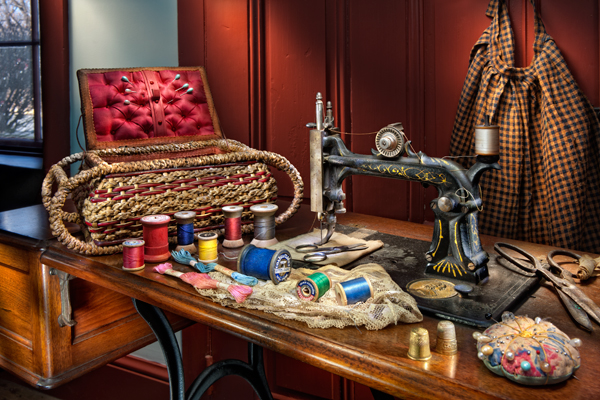
I spent the morning sunday shooting with my friend larry who is light painting master, and we each did our best to do something unique at our local historical society. I chose an old sewing machine, and friends Margi and Dan loaned me several antique sewing items to help bring the shot to life. I used small pen flashlights and my big spotlight to accent the pieces, and the shot took me nearly an hour and a half to do. The best I could figure was this sewing machine is one made by the man who got the first patent for a lock stitch design in 1846, and his name was Elias Howe. Mr Howe had to defend his patent in court from 1849-1854, because he found that Isaac Singer, and Walter Hunt had been selling a facsimile of his machine and lockstitch design. He eventually won the case and won considerable royalties from singer. I can imagine the many hands that worked diligently on this machine in the late 1800s and early 1900s, creating garments and necessities for the family. My grandmother was a great quilter and I remember her working countless hours on her old sewing machine doing patches,and a few times over the years she would relay the stories of how a needle had gone straight through her finger and nail while sewing.
Hats off to the simple life
I have always had a great respect for the Amish and their way of life, and even though they are not big fans of being photographed, I continue to capture the images that present themselves. I have seen so many things in the Amish community over the years,and I have countless memories of those experiences. The Amish have problems just like the rest of the world, and they have some very friendly characters and some unfriendly ones as well. I have watched younger kids get the greatest joy out of the simplest things, and know they are usually more content with an old tattered item than the person who has every electronic gadget. I have been invited onto hay wagons to shoot at harvest time, as long as faces are not shown, and have seen empty beer bottles flying out of buggies while a boom box blares inside. Hopefully I can share more stories and images of my experiences in the future. This buggy/ hat rack was captured a while ago on a sunday drive in the country, shortly after the men headed inside the barn to begin worship. I took this with a long lens from the road, but the day I took this, a tourist with a little point and shoot pulled up, got out and was on his way to the barn door when I basically told him to get the heck off the property. He must have figured it was some sort of scene that was staged for tourists. This was really the only buggy that everyone seemed to pick to place his hat, and looking at the shot now, I counted 32 hats scattered about.
The Turret Lathe
This is another machine shop undertaking, and once again the layers of color and texture drew me to photograph it. The best I could make out was that it is a turret lathe, but don’t hold me to that. I checked in the folder I save my files in and I had shot eleven separate files to light this as shown. Many times I will shoot triple that amount so I don’t miss any piece of the puzzle. As I have mentioned before, a sturdy tripod, a basic laptop and a few flashlights are all you need.
Peeling Paint
Ready for Work
This is the second image from the machine shop that I visited last week. It was fairly light inside the shop,so exposures could not be any longer than 8 seconds, which complicates the whole light painting process, unless of course you are using flash, which I find slightly harder to control in these situations. The reason I prefer flashlights is because I can do a quick test run at certain angles to see what looks the best before tripping the shutter. The various tools used in this shop are quite impressive, and personally I have never seen drill bits on such a heavy-duty scale. The rustic old cart full of tools was just perfect for light painting,and the lathe provided a nice backdrop for the cart.
Valentine’s Day
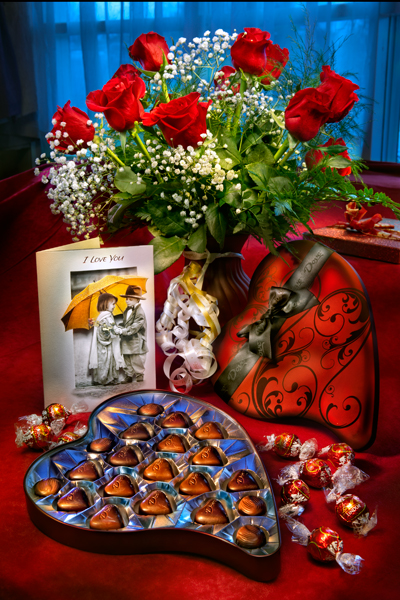
Unfortunately I have never been known as a great romantic, and these roses were something that were sitting at work recently, so they provided an inexpensive opportunity for a photo. The chocolates were bought at a local retailer to round out the theme, and now I am addicted to the Lindt Lindor chocolate truffles shown on the table. Chocolate inside chocolate should be outlawed, but hopefully I can keep my intake to one or two a day.The metal heart shaped lid proved very tricky to light correctly, and so did the candy box interior. I heard on the radio that the average man spends 180 dollars on valentines day, which amazed me for some reason.
Old School vs New
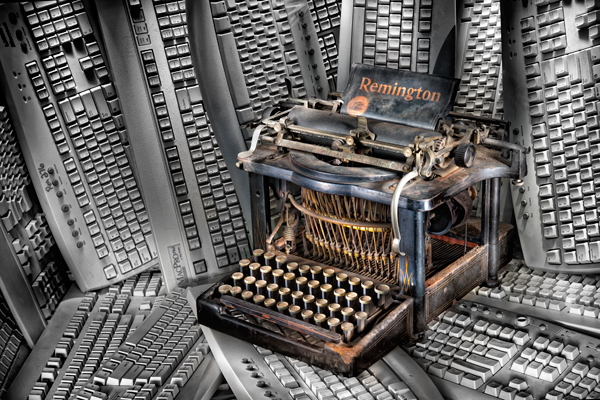
One more variation featuring the old Remington typewriter. A good friend volunteers at a local computer recycling center, so I asked him to borrow a few old keyboards to use as a backdrop for the typewriter. I had the idea to contrast the old technology with the current. Obviously things were made a little better in those days. I basically skimmed the flashlight across the keyboards to accent the keys.
The Golden Age of Music.
Today I wanted to share a photograph I did recently showcasing a beautiful Wurlitzer 125 Military Band Organ that dates back to the early 1900s. This amazing musical instrument is from an era when automobiles,airplanes and electric lighting were all new. Given the opportunity to photograph such a marvelous old piece, I cant help but think of the generations of people who must have had a smile on their face as they listened to this mechanical wonder. This organ would have played in a variety of locations, such as skating rinks and carousels and can supposedly really fill the air with a tune.
As an artist, I have always found music to be very inspiring, and the ability that many musicians and singers have to take you to places that let your spirit soar has always fascinated me. This old instrument undoubtedly captivated the imagination of those who heard it play as they skated or simply enjoyed special times with family and friends. Most certainly, anyone from an older generation would have fond memories come flooding back from their youth if they were to hear this classic come to life.
I must extend a very special thank you to the owner of this piece, for allowing me access to capture something so beautiful, and also the opportunity to express my creativity through my photography. Things like this are not seen every day, and it affords ones imagination an opportunity to dream of things of wonder and beauty from times past.The original catalog states it is a 44 key instrument designed for small to medium size rinks. It lists instrumentation as outside visible-13 Brass trumpets, 13 Brass Piccolos, 13 Wooden Flageolets, 2 Drums,and a Cymbal. Inside it has 5 Wooden Trombones, 5 Open Basses, 13 Open Pipes, 6 Stopped Pipes, 11 Pipes in Accompaniment. Bottom- 5 Stopped Basses, 7 Stopped Pipes, 10 Pipes in Accompaniment, 1 Stop for Trumpets, 1 Stop for Trombones, 1 Stop for Piccolos, 1 Stop for Flageolets, Bass Drum and Cymbal.After reading about all the instruments, it’s probably good I did not ask to hear it play in a closed setting. Shipping weight was noted as 800 pounds.There are also two harmonicas lying on the table to echo the whole music theme, and the one is called a Hohnerphone that utilized a small horn like amplifier. Another very cool old instrument on a smaller scale of course.
For many seeing this image may invoke visions of merry go rounds, circus midways or other childhood memories that few other automatic instruments can match. I hope anyone seeing this image enjoys it as much as I did photographing it.
A glimpse back in time
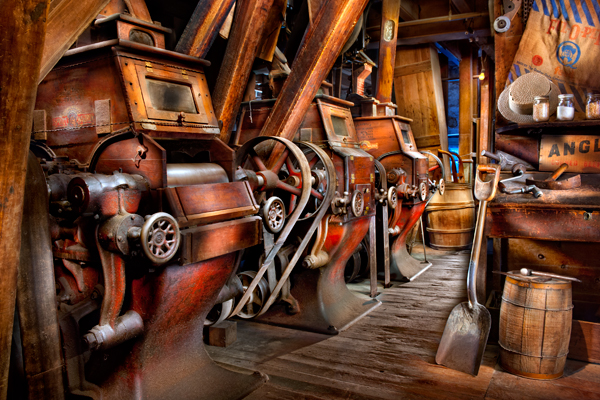
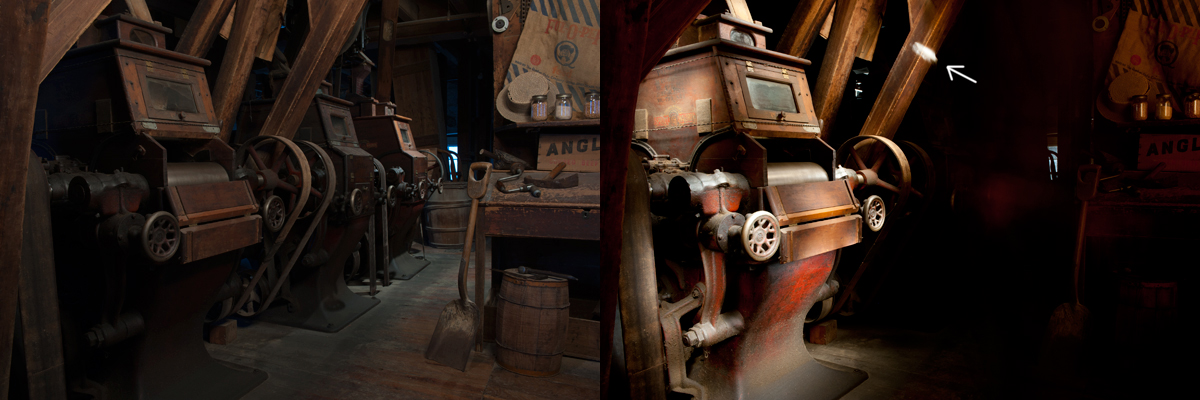
This photograph features the old equipment in a water powered grain mill. This amazing set of machines are still functional, and start right up with the twist of a shaft, which runs two stories to the basement. In the basement there is a huge tank that holds water in reserve, and at a moments notice, the entire operation is ready to go.The date on the machines says patent-1893, and the craftsmanship and build quality is characteristic of an era were necessity was the mother of invention, This is another example of painting with light, and the photography session lasted almost 2 hours and the merging of all the pieces took about 3 hours, but I go in circles sometimes trying to decide which effect I want to pick, so that complicates things a bit. As I have warned in past posts, never bump anything in your shot while doing this, and as usual, I kicked the shovel halfway through, but luckily I had it captured already. Try and find something built to these standards nowadays, and you will be looking a while or digging pretty deep in the pocketbook. The two lower photos represent the base layer on the left, upon which the image is built and that image is a very flat,subdued, dark image,upon which the highlight images are overlayed, and a single light painted sample section,on the right, which includes the flashlight source where I have the arrow pointing. I generally try to keep the light source hidden by my body or simply turned away, so the camera cannot see it. A snoot or shield on the light can help, and even if you see the light source, its irrelevant if that section is not being used.